
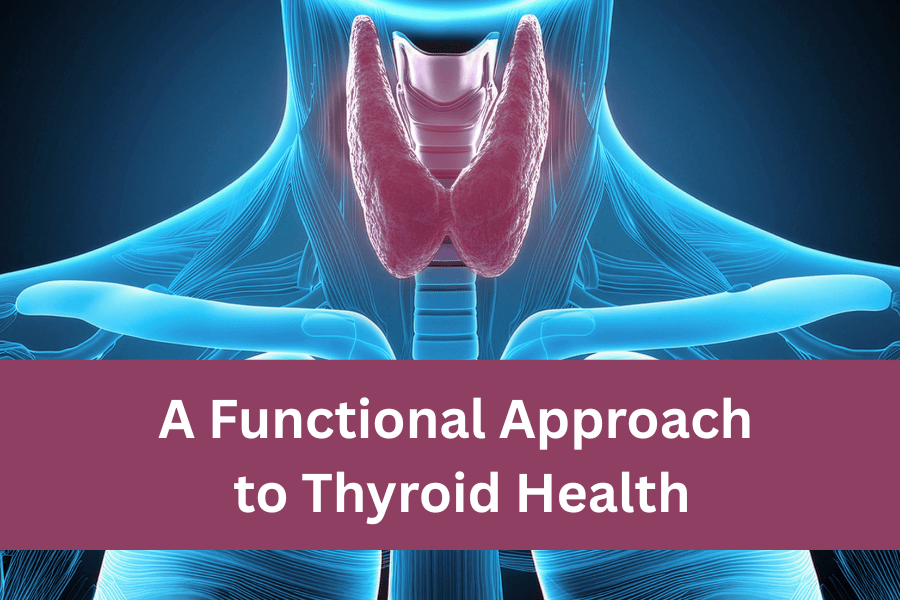
If you’re dealing with fatigue, weight gain, brain fog, or low mood – but your labs keep coming back “normal” – you’re not alone.
Many people with thyroid dysfunction are told everything looks fine, yet they still don’t feel like themselves.
From a functional medicine thyroid perspective, the thyroid is often not the root problem – it’s responding to deeper imbalances in the body.
A Functional Medicine Approach to Thyroid Health
Conventional care often focuses on diagnosing and treating the thyroid directly. But a functional medicine approach to thyroid health looks deeper.
Instead of asking, “What’s wrong with the thyroid?” it asks:
“Why is the thyroid struggling?”
This whole-body approach considers:
- Gut health
- Immune system function
- Hormonal balance
- Nutrient levels
- Stress and lifestyle factors
Because your thyroid doesn’t work in isolation – it responds to everything happening in your body.
The Thyroid as an Early Warning System
A helpful way to understand thyroid dysfunction is to think of the thyroid as an early warning system.
It’s highly sensitive to stress, inflammation, and imbalance. When something is off, the thyroid often reacts first.
That’s why simply treating thyroid symptoms may not resolve the deeper issue.
A Functional Medicine Perspective Regarding Root Causes of Thyroid Issues
Autoimmune Thyroid Disease (Hashimoto’s & Graves’)
One of the most common causes of hypothyroidism is Hashimoto’s thyroiditis, an autoimmune condition where the immune system attacks the thyroid.
Common triggers include:
- Chronic inflammation
- Gut imbalances
- Environmental factors
- Gut Health and Thyroid Function
There is a strong connection between gut health and thyroid function.
- Leaky gut can trigger immune responses
- Dysbiosis increases inflammation
- Poor digestion affects nutrient absorption
A healthy gut is essential for proper thyroid function.
Chronic Stress and Thyroid Hormones
Thyroid and stress are closely connected. Chronic stress can:
- Elevate cortisol
- Suppress thyroid hormone production
- Block conversion of T4 to active T3
This can leave you feeling exhausted, even if labs appear normal.
Nutrient Deficiencies and Thyroid Health
Your thyroid depends on key nutrients to function properly.
Important nutrients include:
- Selenium
- Zinc
- Iron
- Iodine (in the right balance)
- Vitamins A, D, and B12
Without these, thyroid hormone imbalance can occur.
Hormonal Imbalances
Your thyroid works alongside other hormones. Conditions like:
- Estrogen dominance
- Insulin resistance
- PCOS
…can interfere with thyroid hormone activity and metabolism.
Environmental Toxins
Exposure to toxins can disrupt thyroid health. Common culprits include:
- BPA (plastics)
- Pesticides
- Phthalates
- Mercury & Lead
- Chlorine
- Bromide
- Chronic Inflammation and Infections
Chronic inflammation plays a major role in thyroid dysfunction.
- Past infections can trigger autoimmunity
- Ongoing inflammation disrupts hormone signaling
- The immune system remains overactive
- Lifestyle Factors That Affect Thyroid Health
Daily habits matter more than you might think.
Contributors to thyroid issues include:
- Poor sleep
- Lack of movement
- Overtraining
- Irregular eating patterns
Small, consistent changes can make a meaningful difference.
The Brain-Thyroid Connection (HPT Axis)
Thyroid function starts in the brain. The hypothalamus-pituitary-thyroid (HPT) axis controls hormone production:
- Hypothalamus signals the pituitary
- Pituitary releases TSH
- Thyroid produces T3 and T4
When this communication is disrupted, thyroid function can suffer – even if the thyroid itself is healthy.
Why Standard Thyroid Testing Isn’t Always Enough
Many providers rely on TSH alone to assess thyroid function. But TSH doesn’t tell the full story.
A more complete evaluation may include:
- Free T3
- Free T4
- Reverse T3
- Thyroid antibodies
This broader view helps uncover hidden imbalances.
Nutrition
Food can be a powerful tool for healing. A holistic thyroid support plan may include:
- Anti-inflammatory foods
- Removing common triggers (like gluten or dairy for some individuals)
- Stabilizing blood sugar
- Rebuilding nutrient levels
Lifestyle
Simple daily habits can support long-term healing:
- Prioritizing restful sleep
- Managing stress consistently
- Engaging in balanced movement
- Supporting nervous system health
The Bottom Line: Your Thyroid Is Responding – Not Failing
Your thyroid isn’t working against you – it’s responding to what’s happening inside your body.
When you address the root causes of thyroid issues, you give your body the support it needs to restore balance.
Still Not Feeling Like Yourself?
If you’ve been told everything looks normal – but you don’t feel normal – it may be time to look deeper.
A personalized, whole-body approach can help uncover what’s really going on and guide you toward lasting improvement.






0 Comments